Make in India · Burn-in tested · Hypervisor-ready
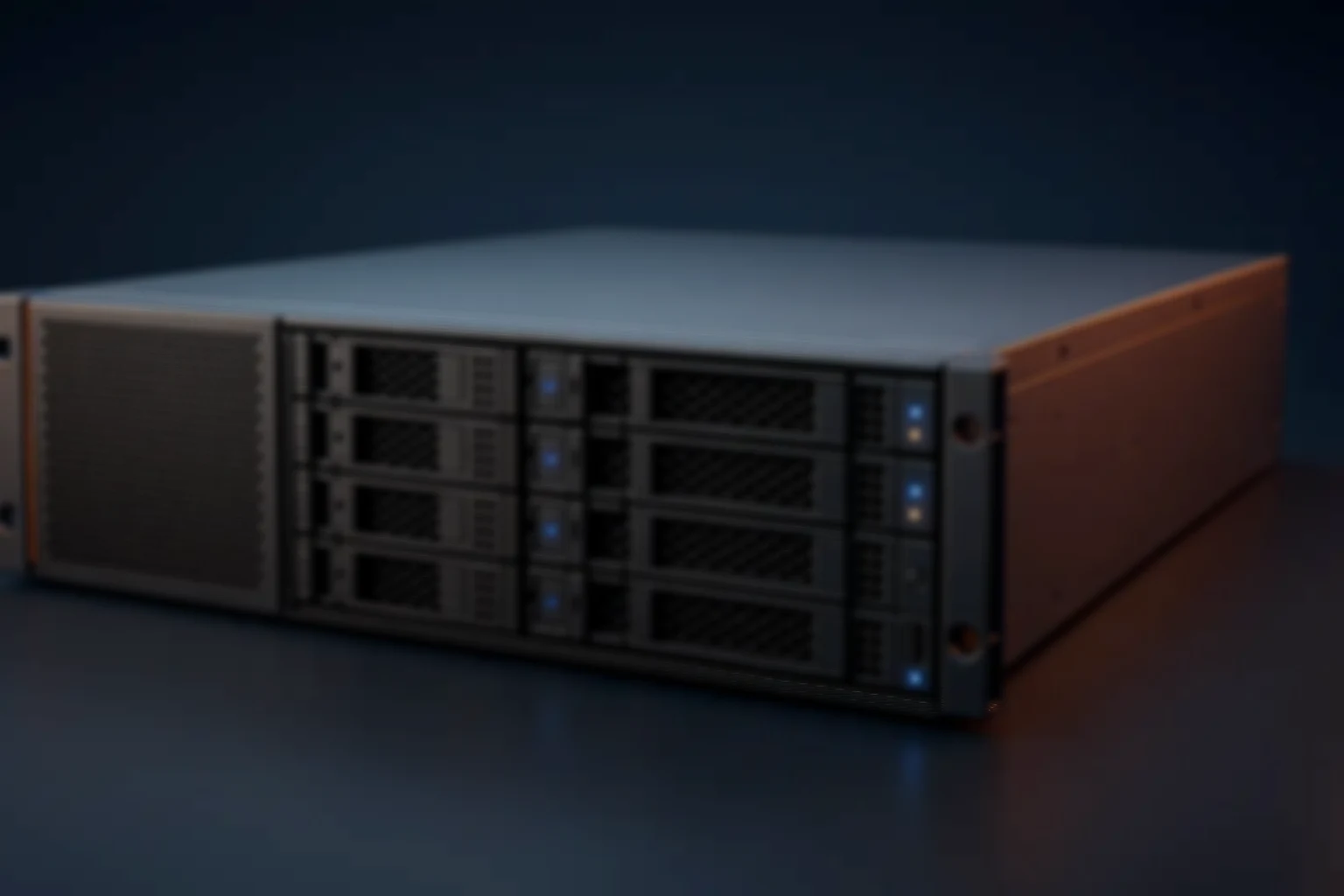
2U rack servers — performance and expansion
Ideal for virtualisation, databases, VDI and AI inference. Flexible PCIe expansion, ample drive bays and better airflow than a slim chassis, validated for Proxmox VE, VMware ESXi, XCP-ng, Hyper-V and Nutanix AHV.
- Dual CPU options — Xeon or EPYC
- NVMe / SAS / SATA — Mixed tiers
- 10 / 25 / 100G — SR-IOV capable
- Remote management — KVM-over-IP
- 24–72h burn-in — Before dispatch
About the form factor
Why 2U is the one most projects land on
2U rack servers strike a balance of performance, expansion and serviceability. Against a slimmer chassis, 2U gives better airflow for sustained loads, more physical space for PCIe cards — GPUs, HBAs, high-speed NICs — and a wider range of storage layouts, without the weight and acoustic profile of a larger enclosure.
Typical 2U builds are dual-socket Intel Xeon or AMD EPYC platforms with 8 to 16 bays for OS and data, and 2 to 6 PCIe slots for accelerators or high-bandwidth networking.
That combination is why 2U ends up under virtualisation hosts, application servers, databases, VDI and AI inference nodes more often than any other form factor.
Why choose 2U at NetBytes
What the chassis is tuned for
- Thermals and acoustics — Tuned fan profiles and ducting for sustained 24×7 duty, rather than for a benchmark that finishes before the chassis warms up.
- Expansion headroom — Flexible PCIe for GPUs, NVMe HBAs and 10, 25 or 100G NICs — the slots are there before you need them.
- Storage flexibility — NVMe scratch paired with SAS and SATA data tiers, on hot-swap bays.
- Operational resilience — Redundant PSUs, IPMI, iDRAC or iLO, and a firmware baseline recorded for the build.
- Hypervisor-ready — Validated for Proxmox VE, VMware ESXi, XCP-ng, Hyper-V and Nutanix AHV, and pre-installed on request.
- Shipped rack-ready — Integrated and manufactured here, burn-in tested for 24 to 72 hours, labelled and shipped ready to rack.
Example configurations
Two starting points, not a catalogue
These are illustrative builds showing where a 2U platform usually starts. Every system is configured to the workload — see the product range for what is currently available.
- 2U virtualisation host — Configuration: Xeon Silver · 256GB · 4× NVMe + 8× SAS/SATA · dual 25G. Notes: IPMI/iLO with KVM-over-IP, redundant PSUs, 24–72h burn-in
- 2U GPU compute — Configuration: EPYC · 512GB · up to 2 GPUs · 10/25/100G. Notes: Airflow optimised for accelerators, NVMe scratch plus SAS/SATA, SR-IOV capable NICs
Illustrative only. Pricing is on request and depends on the configuration actually specified.
Server-class features
The parts that matter after the first week
A server is bought on specification and lived with on management, power and security. These are the parts of the platform that decide what the second year looks like.
Remote management, redundant power and signed firmware are not upsells on these builds — they are what separates a server from a desktop in a rack.
- IPMI, iDRAC or iLO with KVM-over-IP, power control, alerting and firmware tools
- Redundant hot-swap PSUs, front-to-back airflow, optimised fan profiles
- Onboard 1, 10 and 25G with 40 or 100G via PCIe; SR-IOV capable NICs
- TPM, secure boot, signed firmware, and optional encrypted boot
- PCIe slots
- drive bays
- hypervisors validated
- burn-in before dispatch
2U servers — FAQ
What buyers ask before specifying
- Can I customise CPU, RAM, storage and GPUs? — Answer: Yes. Every build is custom — share your workloads and constraints and we will size the platform accordingly.
- Which hypervisors are supported? — Answer: Proxmox VE, VMware ESXi, XCP-ng, Hyper-V and Nutanix AHV. We can pre-install and hand over with access details.
- How is burn-in testing done? — Answer: 24 to 72 hours of continuous load across CPU, RAM and storage, with thermal cycling and error checks before dispatch.
- What are typical lead times? — Answer: Standard 2U builds ship in around 7 to 10 business days. GPU-heavy configurations may vary.
- Do you provide installation and on-site support? — Answer: Yes. We ship nationwide, with on-site assistance in the major cities and remote support elsewhere. On-site cover further afield can be arranged with the contract.
At a glance
The 2U envelope
- Xeon or EPYC platforms
- bays, front serviceable
- hot-swap power supplies
- labelled and tested on arrival
Size it first
Work the numbers before you specify
The calculators run the same arithmetic our engineers do, so you can arrive with a starting configuration rather than a blank page.
- VM density & host sizing — Host count, memory and overcommit worked through before you specify a node.
- RAID capacity planner — Usable capacity, redundancy overhead and rebuild exposure across RAID levels.
- All sizing tools — Six calculators running the same arithmetic our engineers do.
Related range
The rest of the rack range
Where 2U is not the right fit, these are.
- 3U rack servers — Higher drive counts for Ceph and SDS, and the cooling volume larger GPU coolers need.
- 4U rack servers — 24 to 36 bays, up to 8 double-width GPUs, and hyperconverged nodes.
- SNS rack storage — Shared datastores and long-term retention behind the compute.