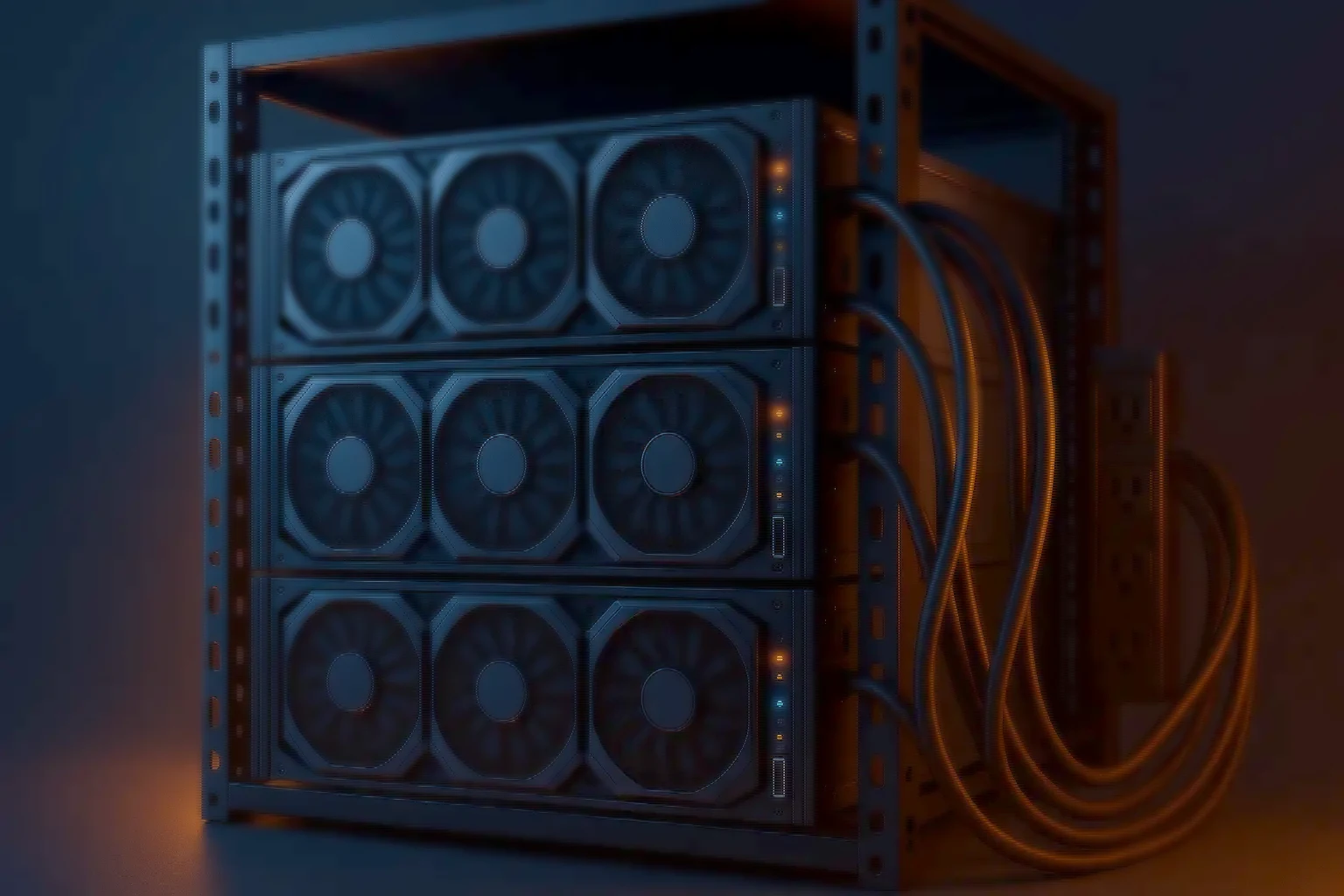
AI/ML & Deep Learning
Multi-GPU training, inference, and HPC clusters purpose-built for AI workloads. From single-node development boxes to rack-scale training farms.
- GPUs per rack node: 2 to 6
- Burn-in at peak draw: 24–72 hrs
- GPU interconnect: NVLink
- Fabric options: 25/100/200G
The challenge
AI/ML workloads are not ordinary compute. Training holds GPUs near full load for days or weeks at a time, and the platform has to hold its clocks throughout — which makes thermal envelope, power delivery and PCIe topology the things that decide the outcome, not the GPU model on the invoice. An off-the-shelf server sized for office workloads will not sustain it.
Our approach
Spectra builds NetBytes GPU platforms in two shapes rather than one: rack nodes carrying 2 to 6 GPUs where density, airflow and serviceability matter, and quiet 1 to 2 GPU towers that run on office mains where a server room is not practical. Thermals, power rails and PCIe topology are validated before the build is committed, firmware, driver and container stacks are pinned to known-good versions, and every system is burn-in tested for 24 to 72 hours with the GPUs at peak draw.
What makes this workload hard
- Thermal Headroom Airflow-optimised paths and fan curves, so GPUs hold boost clocks under continuous training load.
- Power Integrity High-watt redundant PSUs sized for peak draw, with rail stability validated under burn-in.
- NVMe Tiers Separate OS, scratch and dataset volumes, with U.2/U.3 backplanes for hot-swap NVMe pools.
- Fast Fabric 25, 100 and 200G options with RoCEv2 or InfiniBand for distributed training and rapid data ingest.
- Framework Alignment CUDA and cuDNN with driver pinning for PyTorch, TensorFlow and common render and compute stacks.
- Fleet-Ready Operations iBMC and IPMI, PXE, golden images and automation hooks for reproducible rollouts.
What we deliver
- Rack nodes carrying 2 to 6 GPUs Thermally validated and power-balanced, from 2-GPU inference nodes to 6-GPU density builds.
- Quiet 1 to 2 GPU towers Office-ready platforms on standard mains power, for proofs of concept, fine-tuning and creative work.
- PCIe Gen4/Gen5, NVLink on select GPUs We map framework and batch size to the interconnect. Many deployments run excellently on PCIe alone.
- U.2/U.3 NVMe pools OS, scratch and dataset tiers kept separate, on hot-swap NVMe backplanes.
- 25/100/200G with RoCEv2 or InfiniBand Fabric matched to the workload — inference at the low end, distributed training at the high.
- Pinned firmware, driver and container stacks Known-good versions locked so an update does not silently change your throughput.
The hardware: GPU AI server hardware