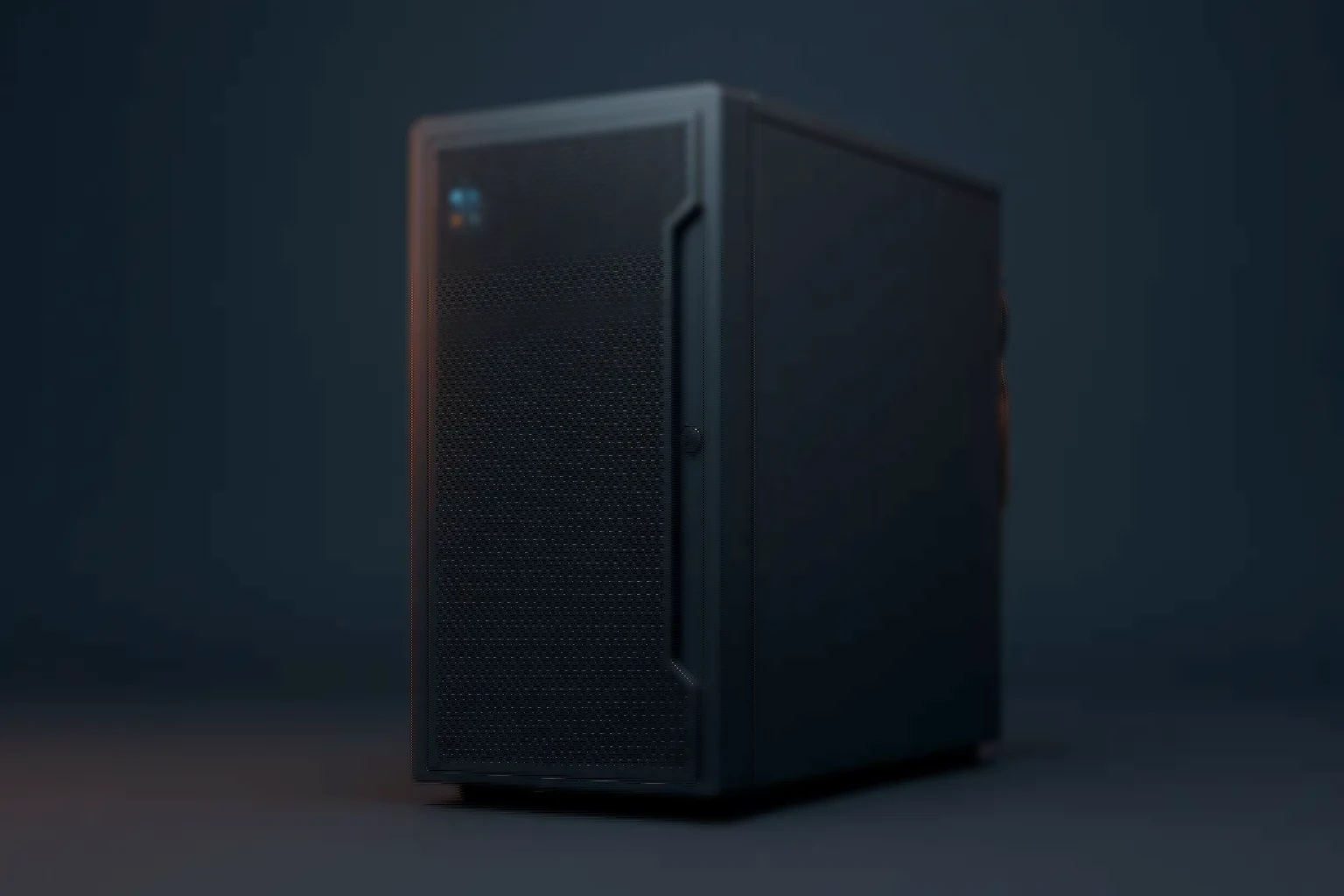
Servers · Tower Servers · Single Socket
Single socket tower servers
Quiet, efficient enterprise towers with Intel Xeon or AMD EPYC CPUs, DDR5 ECC memory, NVMe boot and office-friendly acoustics — for branch offices, SMBs and edge deployments.
- Xeon or EPYC — Single socket
- DDR5 ECC — 128–256GB
- NVMe boot — M.2 or U.2
- Low-noise cooling — Office-friendly
- IPMI / iBMC — Out-of-band
About the form factor
Enterprise reliability without a rack
Single socket tower servers are for organisations that need enterprise reliability in a compact, quiet form factor. They balance cost-efficiency against real compute, memory and storage capability, for branch offices, SMBs and edge deployments.
They suit businesses that need data-centre-grade behaviour in environments without racks, or where acoustics and energy efficiency matter most. From accounting applications to edge analytics, they deliver consistent uptime with enterprise components underneath.
The distinction that matters is not size but class: ECC memory, out-of-band management and hot-swap bays are what separate one of these from a desktop that happens to be running a server role.
The platform
What the specification covers
A single-socket tower is a full enterprise platform in a chassis you can put beside a desk.
- Intel Xeon E or Xeon Scalable, or AMD EPYC, in a single socket
- Up to 128 to 256GB of DDR5 ECC memory
- Hot-swap 3.5" and 2.5" SATA bays, with NVMe boot via M.2 or U.2
- PCIe Gen4 and Gen5 slots for NICs, RAID and HBA cards, or a GPU
- Out-of-band management with IPMI or iBMC-class features
- Optimised for virtualisation, databases, file and print, and branch applications
Feature highlights
The five things buyers specify on
- Quiet operation — Optimised airflow and acoustic tuning, so the machine can sit in an office or branch rather than needing a room of its own.
- Flexible storage — SATA drives, M.2 and U.2 NVMe, and hot-swap bays give administrators more than one storage tier to work with.
- Remote management — Integrated IPMI or iBMC for monitoring, power control and remote media — the branch server nobody has to visit.
- Expandable design — PCIe Gen4 and Gen5 slots for NIC, GPU and RAID or HBA expansion as workloads change.
- Security — TPM, secure boot and firmware integrity for compliance and data protection.
- Branch-ready — Sized and priced for the site office, with the same build and burn-in process as the rack platforms.
Example configuration
Where a single-socket tower usually starts
An illustrative build, not a catalogue item. Every system is configured to the workload.
- Single socket tower — base — Configuration: Xeon E or EPYC · DDR5 ECC · quiet acoustics. Notes: 4–8 bays for 3.5"/2.5" SATA, NVMe boot on M.2, 1 or 10G NIC options, validated for Proxmox VE, VMware ESXi and Hyper-V
Illustrative only. Pricing is on request and depends on the configuration actually specified.
Single socket towers — FAQ
What buyers ask before specifying
- When should I choose single socket? — Answer: For efficiency and lower cost in branch and SMB environments, where moderate core counts and memory are sufficient.
- How much memory can be installed? — Answer: Typically 128GB to 256GB of DDR5 ECC, depending on the CPU and motherboard.
- What storage options are available? — Answer: Hot-swap SATA bays, M.2 or U.2 NVMe boot, and RAID or HBA controller options.
- Which workloads suit it best? — Answer: Virtualisation clusters, domain controllers, branch office servers, edge analytics, file and print, and databases up to medium scale.
- Can GPUs be added? — Answer: Yes. Entry-level to mid-range GPUs fit supported PCIe slots, for visualisation or ML inference.
At a glance
The single-socket envelope
- Xeon E/Scalable or EPYC
- DDR5 ECC at the top end
- hot-swap bays
- and secure boot
Size it first
Work the numbers before you specify
The calculators run the same arithmetic our engineers do, so you can arrive with a starting configuration rather than a blank page.
- VM density & host sizing — Host count, memory and overcommit worked through before you specify a node.
- RAID capacity planner — Usable capacity, redundancy overhead and rebuild exposure across RAID levels.
- All sizing tools — Six calculators running the same arithmetic our engineers do.
Related range
Related platforms
When the workload outgrows a single socket, or the room gains a rack.
- Dual socket tower servers — Maximum cores and memory bandwidth, GPU-capable, still quiet enough for a lab.
- 2U rack servers — The same class of platform once a rack is available.
- SNS tower storage — Quiet 4 and 8 bay enterprise storage for the same branch and edge sites.